


What Is the Difference Between Teeth Scaling vs Cleaning?
What Is the Difference Between Teeth Scaling vs Cleaning?
Patients often hear “regular cleaning,” “deep cleaning,” and “scaling” during dental visits, and the...
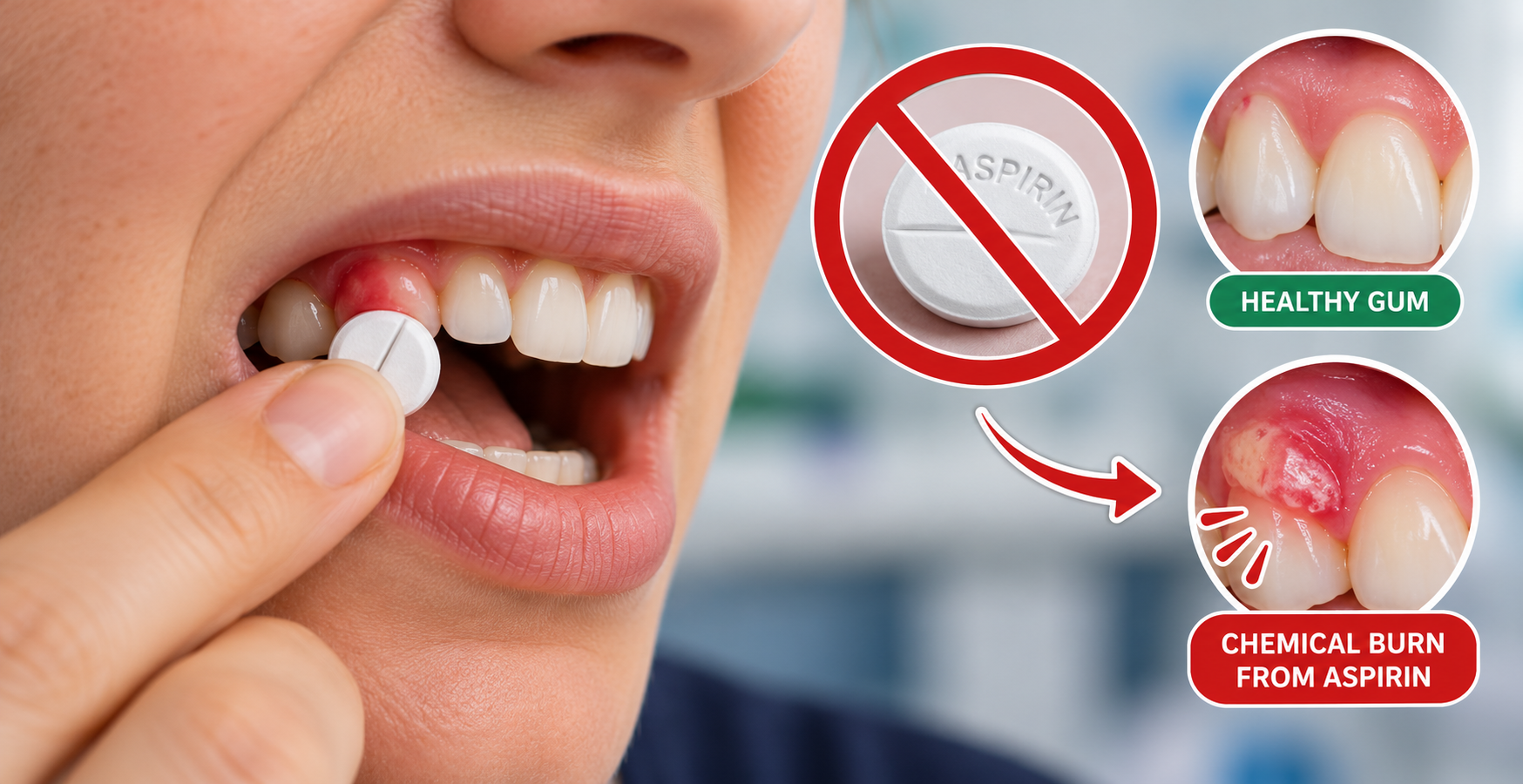
Tooth pain has a way of making people try almost anything for relief. One old home remedy involves putting aspirin on a tooth or pressing a tablet against the nearby gum. It may sound sensible because aspirin is a pain reliever, but using it this way can create a new problem without fixing the tooth.
Aspirin is meant to work after it is taken correctly, not after it sits against the soft tissue in your mouth. Direct contact can irritate or burn the gum. The toothache can then remain because the cavity, crack, infection, or damaged nerve behind the pain is still there.
AtBella Dental, we provide emergency dental care for sudden or severe tooth pain. We can examine the tooth, use digital X-rays when needed, and find the cause of the problem. This guide explains why putting aspirin on a tooth is unsafe, what can happen to your gums, and what to do while you arrange dental care.
Putting aspirin on your tooth or gums can burn tissue, so it should never be used as a topical treatment for toothache.
The safest next step is to control the pain without placing medicine on the gum and have the tooth checked.
Aspirin contains acetylsalicylic acid. If a tablet is held against one area of the gum, that acid can irritate the surface and cause a chemical burn. The risk rises when the tablet stays in place for a longer period.
The damaged area may look white at first. It can later feel raw, sore, or tender as the surface tissue peels away. Eating and brushing may become uncomfortable until the tissue heals.
If you have already put aspirin against your gum, remove it and rinse your mouth gently with water. Do not place another tablet on the area. Contact us if the burn is painful, looks severe, or does not start improving.
No. Tooth pain is a symptom, and the treatment depends on what is causing it. Aspirin may reduce pain when it is taken safely, but it cannot remove decay, repair a crack, or clear an infection inside a tooth.
A cavity may need a filling. A tooth with an infected or badly inflamed nerve may need root canal treatment, while a tooth that cannot be repaired may need extraction. Gum problems and wisdom teeth can cause pain too, so an exam is the best way to find the source.
Covering the pain for a few hours can be useful while you arrange care, but the tooth still needs attention if the problem remains.
Aspirin can be used as an oral pain reliever by some adults, but it is not safe for everyone. Follow the package directions and ask a doctor or pharmacist if you are unsure about other medicines or health conditions.
Pain medicine may make a toothache easier to manage for a short time. Use tablets only as directed, and never press them against the tooth or gum. The dental problem still needs treatment if the pain continues.
You can take a few simple steps that are less likely to irritate the mouth. Rinse gently with warm water and floss around the sore tooth in case food is trapped nearby. Keep brushing, but use gentle pressure around any tender gum tissue.
A cold pack against the outside of your cheek may help if there is swelling or pain after an injury. Avoid very hot, cold, or sugary foods if they trigger the tooth. Chewing on the other side can also make eating more comfortable until we can examine you.
Do not place aspirin, crushed pain tablets, alcohol, or other harsh substances directly against the tooth or gum. Home care can help with comfort, but it cannot diagnose the cause.
Tooth pain can start for many reasons, and the type of pain does not always tell you exactly what is wrong. An exam lets us check the tooth, gum, bite, and nearby area before deciding on treatment.
Decay can move through the tooth and reach the sensitive tissue inside. Deeper decay may cause pain with sweets, cold drinks, or biting. A filling can repair some cavities, but decay near the nerve may need different treatment.
A crack can cause sharp pain when you bite or release pressure. Temperature changes may make the tooth sensitive too. Treatment depends on where the crack sits and how much healthy tooth is left.
An infection can cause a deep ache, swelling, or a bad taste in the mouth. A pocket of infection called an abscess can form around the tooth or gum. Fever or facial swelling needs prompt attention because the infection may be spreading.
Sore gums can make it feel as though the tooth itself hurts. Food trapped around a partly erupted wisdom tooth can also cause pain and swelling. We can check the gum and tooth together to find where the problem starts.
Putting aspirin on a sore tooth may feel like a way to deal with the problem at home. The danger is that temporary pain relief can make it easier to put off a dental visit, even though the cause is still there.
Decay can keep spreading, a crack can become harder to repair, and an infection can grow. Pain can also fade if the nerve inside a badly damaged tooth stops working, but that does not mean the tooth has healed.
A toothache that keeps returning deserves a proper exam. Finding the source early often gives us more options for treating the tooth.
Severe or sudden tooth pain deserves prompt attention, especially if it stops you sleeping, eating, or going about your day. Contact us if the pain is getting stronger, the tooth is badly cracked, or you have swelling around the gum or face.
Fever, pus, or a bad taste can point to infection. Swelling that spreads quickly needs urgent care. Trouble breathing or swallowing requires emergency medical attention rather than waiting for a routine dental appointment.
Bella Dental offers emergency dental services in Oxnard and aims to see urgent patients as quickly as possible. We can examine the problem and start the right treatment once we know what is causing the pain.
We ask about the pain and examine the tooth and nearby gum. Digital X-rays can help us find decay, a crack, or infection below the surface. Once we know the cause, we can explain the treatment options and start care when possible.
Treatment may involve a filling, root canal, drainage, or extraction. The right choice depends on how much of the tooth can be saved and where the problem starts.
Putting aspirin on a tooth can burn the nearby gum without treating the reason your tooth hurts. Safer short-term pain relief can make the wait for care easier, but a lasting toothache still needs a proper diagnosis.
AtBella Dental, we can examine painful teeth, take digital X-rays when needed, and treat many dental emergencies. Same-day appointments are available when possible, so you do not have to keep trying home remedies while the problem gets worse.
Book an emergency dental appointment with us if your toothache is severe, keeps returning, or is not settling. We can find the source and help you get the right treatment.
It may irritate or burn the gum, and it does not treat the source of the toothache. Aspirin is designed to be taken as directed rather than held against the tooth.
A mild chemical burn may improve after the aspirin is removed, but healing time can vary. Contact us if the area is very painful, looks severe, or is not improving.
Remove the aspirin and rinse your mouth gently with water. Do not place more aspirin on the tooth or gum. If the tissue is badly sore or damaged, book a dental check.
No. Aspirin may help with pain when taken correctly, but it cannot remove an infection inside a tooth or gum. Dental treatment is needed to deal with the source.
No. Direct contact can burn or irritate the gum tissue. Use pain medicine only as directed and arrange a dental exam if the toothache continues.
What Is the Difference Between Teeth Scaling vs Cleaning?
What Is the Difference Between Teeth Scaling vs Cleaning?
Patients often hear “regular cleaning,” “deep cleaning,” and “scaling” during dental visits, and the...

Will Root Canal Hurt?
Will Root Canal Hurt?
Root canals are often misunderstood, and the fear surrounding them typically comes from outdated ide...
What Are the Signs of Early Periodontal Disease?
What Are the Signs of Early Periodontal Disease?
Maintaining healthy gums is just as important as keeping your teeth strong and cavity-free. Many peo...
Call Bella Dental at (805) 394-3000 for more information on booking an appointment, or fill out the form below and we will reach out to you!
