



Is Natural Sugar Bad for Your Teeth?
Is Natural Sugar Bad for Your Teeth?
Many people cut back on candy and soda, then wonder where fruit, honey, juice, and dried fruit fit i...
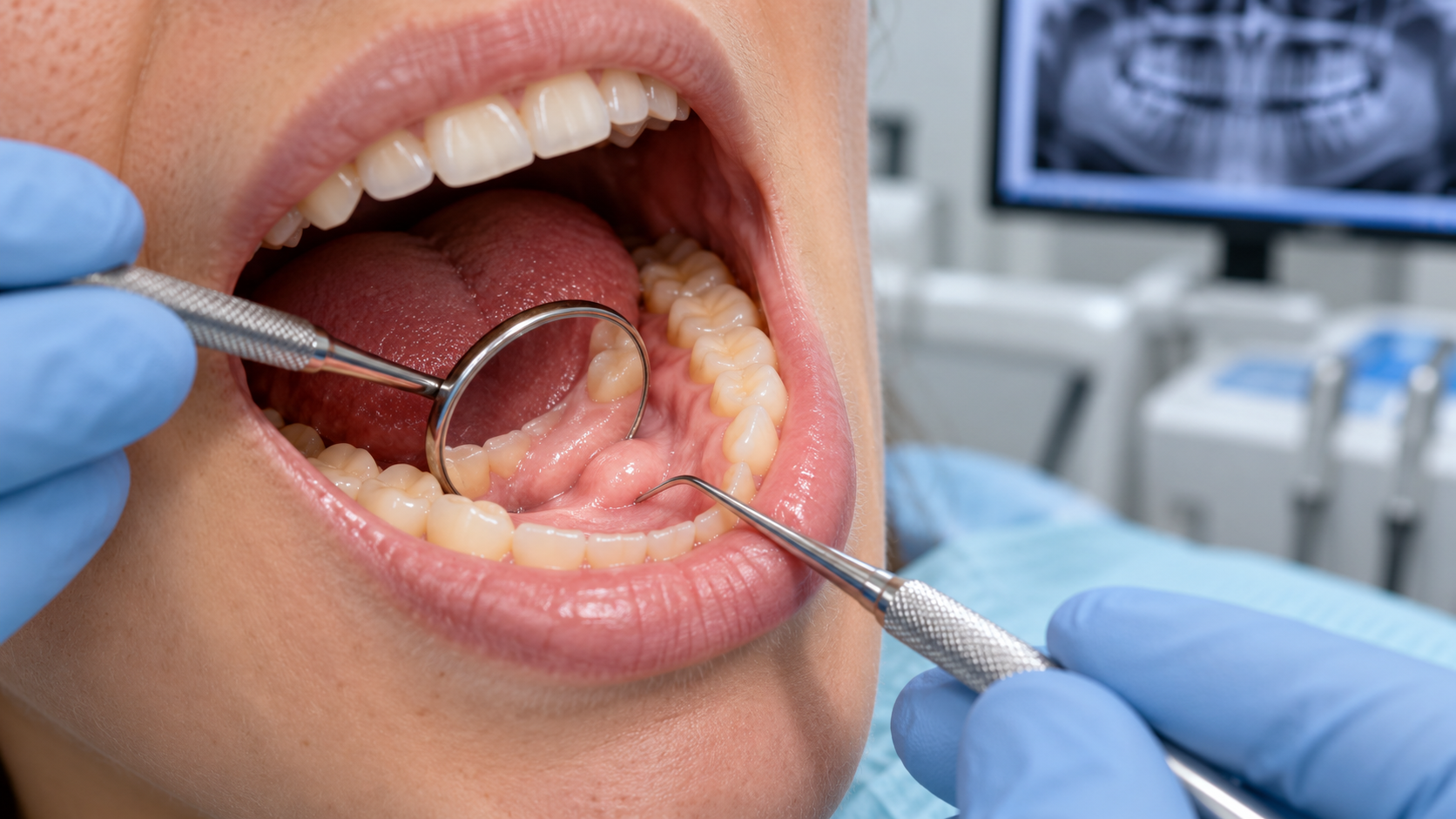
Finding a hard lump along your gumline can be unsettling. It may feel like part of the jawbone is pushing through the gum, or you may notice a smooth bump that has been there for years. Some are harmless changes in the shape of the jaw, while others need a dental check.
Bony bumps on gums are often caused by extra bone growth called tori or exostoses. These growths are usually harmless and may never need treatment. A hard spot can also appear during healing after a tooth extraction if a small piece of bone works its way toward the surface.
At Bella Dental in Oxnard, we can examine the area and use digital X-rays or 3D imaging when needed. This helps us tell normal bone from a dental problem that needs treatment. This guide explains the common causes of hard gum bumps, what different types can feel like, and when it is a good idea to book an appointment.
Hard bumps can have several causes, and the location gives us useful clues.
A dental exam can usually narrow down the cause and show if an X-ray is needed.
Many bony bumps on gums are simply areas where the jawbone is thicker. Dentists often call these growths tori or exostoses. They are made of normal bone and are usually harmless.
These growths can be present for years before you notice them. They often feel very hard and smooth because only a thin layer of gum covers the bone. Most do not hurt unless food, a toothbrush, or a dental appliance rubs against them.
Mandibular tori grow on the inside of the lower jaw, usually near the premolars and under the tongue. They can appear on one side, but many people have them on both sides. The bumps may be small and rounded or large enough to be easy to feel with your tongue.
Tori do not spread from person to person, and they are not cancer. Most people do not need treatment. We may talk about removal if a torus makes eating, speaking, or wearing a dental appliance difficult.
An oral exostosis is another area of extra bone. These bumps can form along the outer side of the upper or lower jaw, closer to the cheeks or lips. This location can make them feel more like a bump directly on the gumline.
Exostoses are usually painless and slow growing. Their shape and size can vary, so an exam is useful if you are not sure what you are feeling. We can check that the bump matches a normal bony growth and is not another type of lump.
There is no single reason everyone develops tori or exostoses. Genetics and the natural shape of the jaw appear to play a part. Some people are simply more likely to form these areas of extra bone.
Teeth grinding and heavy pressure on the jaw may also be linked with mandibular tori. That does not mean grinding causes every bony growth. If we see signs that you clench or grind your teeth, we can check your bite and talk about ways to protect your teeth.
A bony growth may become more noticeable over time even if it changes very slowly. Many people first find one by running their tongue along the gum or seeing it in the mirror.
A hard or sharp spot after a tooth extraction can have a different cause. Small pieces of bone can sometimes work their way through the gum as the socket heals. These are often called bone spicules or bone fragments.
The area may feel sharp rather than smoothly rounded. Some fragments come out on their own as healing continues. Others can irritate the tongue or gum and need to be removed by a dental professional.
Do not pick at a hard spot or try to pull it out yourself. Healing gum tissue can be easy to injure, and a dentist can tell if the area is a loose fragment or part of the jaw. If the site becomes more painful, swollen, or starts draining, contact us so we can check for infection.
A gum abscess is not a true bony growth, but swelling can sometimes feel firm. An abscess is a pocket of infection in the gum or around a tooth. It often looks more like a swollen pimple or boil than a smooth area of bone.
Pain, redness, a bad taste, pus, or a toothache can point toward infection. Fever or swelling in the face can mean the infection is becoming more serious. A gum abscess needs professional treatment and will not clear simply because the swelling goes down.
At Bella Dental, we offer emergency dental care and can examine painful gum swelling as soon as possible. Treatment depends on where the infection starts and may include drainage, deep cleaning, root canal treatment, or extraction.
True bony bumps on gums usually feel as hard as the jaw around them. Tori and exostoses often have a smooth surface and change very slowly. They may also appear in common locations, such as inside the lower jaw or along the outer jawbone.
Soft, sore, red, or fast-changing bumps are less typical of harmless extra bone. A sharp area after oral surgery also has a different history from a torus that has been present for years. The way a lump feels can give you clues, but it cannot confirm the cause.
We can examine the gum and nearby teeth to see where the bump starts. Digital X-rays or cone beam 3D imaging can give us a closer look at the bone if more information is needed.
Most tori and exostoses do not need to be removed. If the growth is painless and does not get in the way, monitoring it during routine dental visits may be enough.
Treatment can make sense if the bone keeps getting sore or makes a denture or other dental appliance hard to fit. A very large growth can sometimes affect eating or speaking too. In those cases, removal involves reshaping the extra bone and allowing the gum to heal over it.
The right choice is based on what the growth is doing, not simply on the fact that it is there. We can explain the options after we have checked the area.
Book a dental visit if a hard bump is new, changing, or painful. A lump that bleeds, develops a sore, or keeps getting larger also needs a closer look. New numbness or trouble chewing or swallowing should be checked as well.
Most mouth lumps are not cancer, but a lump or thick area that lasts more than two weeks deserves professional attention. The same applies to a mouth sore that does not heal. An exam lets us find the cause rather than guessing from how the area looks.
Painful swelling with fever, pus, or facial swelling can point to infection. Contact us promptly if you notice those symptoms. Trouble breathing or swallowing needs emergency medical care.
Bony bumps on gums are often harmless tori or exostoses, especially when they are smooth, painless, and slow growing. A sharp bump after an extraction may be a small bone fragment, while a sore or swollen lump can have another cause.
AtBella Dental in Oxnard, we can examine the bump and use imaging when needed to see what is happening below the gum. Once we know the cause, we can tell you if it needs treatment or can simply be monitored.
Book an appointment with us if you have found a new hard bump, the area is changing, or you want a clear answer about what you are feeling.
They can be. Tori and exostoses are harmless areas of extra bone that many people have. A new or changing bump should still be checked so we can confirm what it is.
Tori and exostoses can grow slowly over time. Fast growth is less typical, so book a dental exam if a bump seems to be changing quickly.
No. Do not cut, pull, or pick at a hard piece of bone. A dentist can check whether it is a loose bone fragment and remove it safely if treatment is needed.
Most bony growths such as tori are harmless and are not cancer. A new lump, a sore that does not heal, bleeding, numbness, or a change lasting more than two weeks should be checked.
A small bone fragment can sometimes move toward the surface as an extraction site heals. It may feel sharp or hard under the gum. We can check the area if it is painful, persistent, or bothering your tongue.
Is Natural Sugar Bad for Your Teeth?
Is Natural Sugar Bad for Your Teeth?
Many people cut back on candy and soda, then wonder where fruit, honey, juice, and dried fruit fit i...
How to Know if You Have Gingivitis
How to Know if You Have Gingivitis
Gums can change before tooth pain ever begins. A little blood in the sink, tenderness while brushing...

Will Cavities and Tooth Decay Go Away on Their Own?
Will Cavities and Tooth Decay Go Away on Their Own?
When you first notice mild tooth sensitivity or a small dark spot on your tooth, it’s tempting to wa...
Call Bella Dental at (805) 394-3000 for more information on booking an appointment, or fill out the form below and we will reach out to you!
