


What Does the Beginning of a Cavity Look Like?
What Does the Beginning of a Cavity Look Like?
Maintaining a healthy smile requires vigilance and a proactive approach to oral hygiene. Brushing an...

Hearing that you have a small cavity during a routine dental checkup can be unsettling. You might not feel any pain or notice any visible changes in your teeth, which can make it hard to understand why treatment is being recommended at all. The reality is that tooth decay is a progressive condition. What starts as a minor issue can quickly escalate into a more significant problem if left untreated. Understanding the nature of a small cavity and the importance of early intervention is crucial for maintaining your oral health.
Many people assume that if a tooth does not hurt, it does not need attention. This is a common misconception. A small cavity often develops silently, slowly eroding the protective enamel layer of your tooth. By the time you experience pain or sensitivity, the decay has likely reached the deeper, more sensitive layers of the tooth.
Addressing a small cavity early on is a straightforward process that can save you from more extensive and costly procedures down the line. At Bella Dental, we prioritize early detection and conservative treatment to protect your smile.
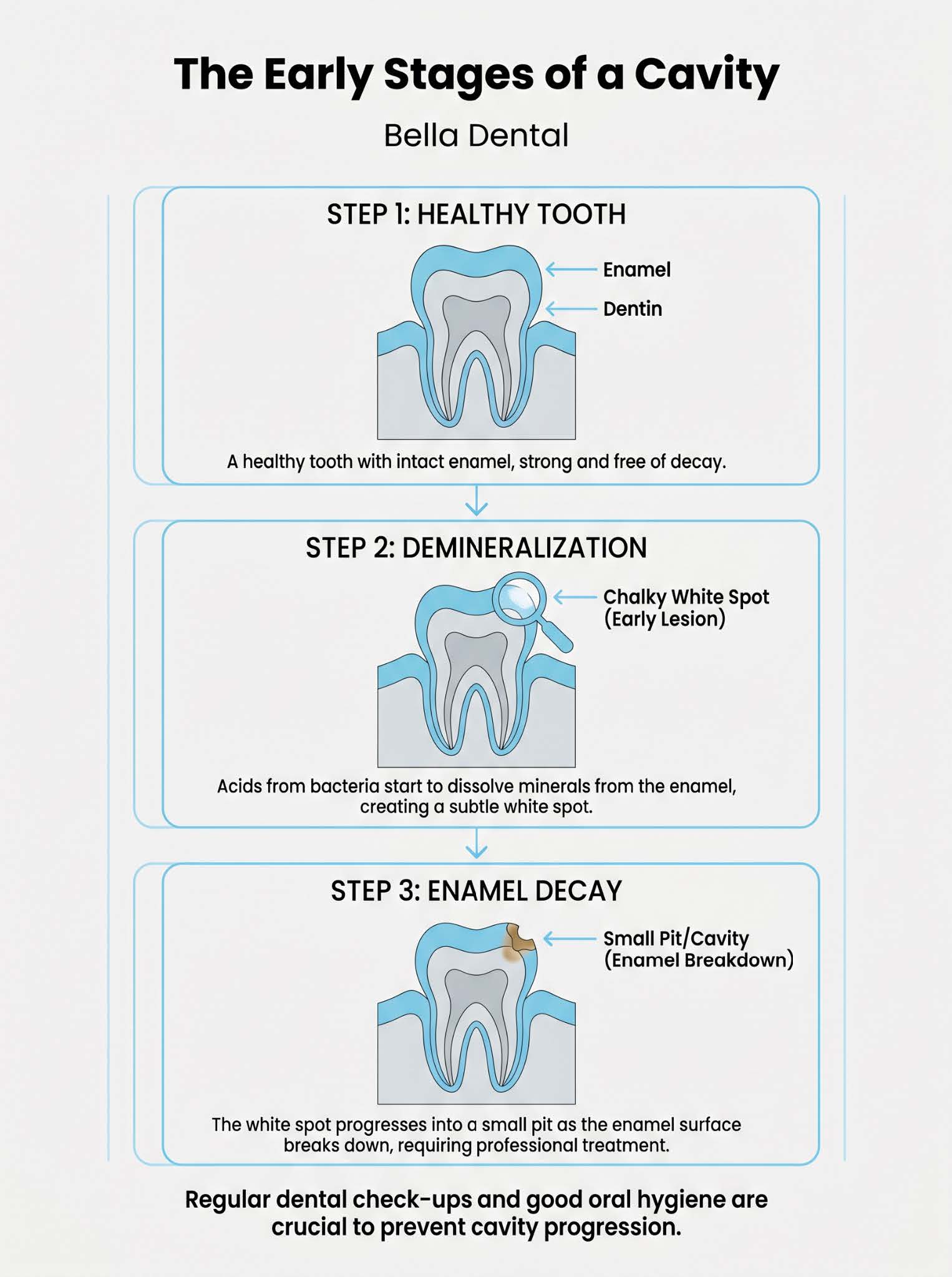
You might be curious about what does a small cavity look like. In its earliest stages, a small cavity might not look like much at all. It often begins as a faint white spot on the surface of the tooth, indicating an area where minerals have been lost from the enamel. As the decay progresses, this spot can turn light brown or grey, and eventually, a tiny pit or hole may form.
If you are looking for a small cavity in tooth on your own, it can be genuinely difficult to spot without professional dental tools. Sometimes, it might appear as a tiny dark speck or a slight shadow on the biting surface or between the teeth. A small cavity in molar is particularly common because the deep grooves and crevices in back teeth can easily trap food particles and bacteria.
Regular dental exams and X-rays are the most reliable ways to detect an early stage small cavity before it becomes visible to the naked eye or causes any discomfort. This is one of the most important reasons to keep up with your routine dental appointments, even when you feel completely fine.
A frequent question patients ask is can a small cavity go away. The short answer is no. Once a cavity has formed and broken through the enamel, the tooth cannot heal itself. The decayed portion of the tooth must be professionally removed and restored with a filling.
There is, however, an important nuance to understand. If the decay is caught in the very earliest stages, before a true cavity has formed, it is sometimes possible to halt the process. This is known as remineralization. Improving your oral hygiene routine, using fluoride toothpaste, and incorporating a fluoride mouthwash can help strengthen the enamel and prevent the decay from progressing further.
Your dentist may also apply a professional fluoride treatment during your visit to support this process. But once a physical hole or cavity exists in the tooth structure, professional treatment is required. You cannot reverse a small cavity that has already compromised the integrity of the enamel.
Treating an early stage small cavity is vital for several reasons. First and foremost, it stops the decay from spreading. Tooth decay is caused by bacteria that produce acids, which eat away at the tooth. If left unchecked, these bacteria will continue to penetrate deeper into the tooth, eventually reaching the pulp, where the nerves and blood vessels are located.
When decay reaches the pulp, it can cause severe pain and infection, often necessitating a root canal or even tooth extraction. By addressing a small cavity promptly, you preserve more of your natural tooth structure. The procedure is simpler, quicker, and far less invasive than treating advanced tooth decay. A small cavity in tooth that is treated early requires only a small filling, whereas waiting can mean a much larger restoration or a crown.
At Bella Dental, we use strong, natural-looking composite resin to repair cavities, restoring the strength and appearance of your tooth with minimal removal of healthy tooth structure.
If you are wondering how long does it take to fill a small cavity, you will be pleased to know that it is a very efficient process. In most cases, a small cavity filling takes less than an hour from start to finish, and many patients are surprised by how straightforward the appointment is.
The procedure begins with numbing the area around the affected tooth to keep you comfortable throughout. Once you are numb, the dentist carefully removes the decayed portion of the tooth and cleans the space thoroughly. The filling material is then placed in layers and shaped to match the tooth’s natural contours. For composite resin fillings, a special curing light is used to harden the material.
Finally, the filling is polished, and your bite is checked to make sure everything feels natural and comfortable. How long does a small cavity filling take can vary slightly depending on the location of the tooth and the extent of the decay, but it is generally a quick and straightforward appointment that fits easily into a lunch break.
Once your filling is placed, there is very little downtime. Most patients are able to eat and speak normally as soon as the local anesthesia wears off, which is typically within a few hours of the appointment. It is advisable to wait until the numbness has fully subsided before eating to avoid accidentally biting your cheek or tongue.
It is completely normal to experience some mild sensitivity to temperature or pressure for a few days after the procedure. This is simply your tooth adjusting to the new filling material. The sensitivity usually resolves on its own within a week or two. If you notice that your bite feels slightly off or that the sensitivity persists beyond a couple of weeks, contact your dental team. A quick adjustment can usually resolve any discomfort.
Caring for your filling is no different from caring for your natural teeth: brush twice a day, floss daily, and attend your regular checkups so the filling can be monitored over time.
Treating a small cavity is simple, but preventing them in the first place is always the best approach. Maintaining a consistent oral hygiene routine is your first line of defense against tooth decay. This includes brushing your teeth twice a day with fluoride toothpaste and flossing daily to remove plaque and food particles from between your teeth.
Using an antimicrobial mouthwash can also help reduce the bacteria that cause tooth decay. Paying attention to your diet plays a significant role as well. Limiting sugary snacks and acidic beverages can substantially lower your risk of developing cavities. Drinking water throughout the day, particularly fluoridated tap water, helps rinse away food debris and supports enamel strength.
Regular dental checkups and cleanings at Bella Dental are essential. Professional cleanings remove hardened tartar that you cannot brush away at home, and routine exams allow us to catch any potential issues early, before they require more complex treatment.
Finding out you have a small cavity is not a reason to panic, but it is a reason to take action. Ignoring the problem will only allow the decay to worsen, leading to more significant dental issues and potential discomfort. Early treatment is the key to preserving your natural teeth and maintaining a healthy smile for the long term.
If you suspect you might have a cavity, or if it has been a while since your last dental checkup, do not wait for pain to develop. Proactive dental care is the most effective way to protect your oral health. Our team at Bella Dental is dedicated to providing gentle, thorough care to keep your smile looking and feeling its best.
Do not let a small cavity turn into a big problem. Protect your smile and your oral health by addressing tooth decay early. Contact Bella Dental today to schedule an appointment for a thorough examination and reliable cavity repair.
A cavity can look like a small white, brown, or black spot on the tooth. As it grows, it may appear as a visible hole or pit in the enamel.
You cannot reverse a small cavity once a hole has formed in the enamel. Very early decay, before a hole forms, can sometimes be halted with fluoride treatment and improved oral hygiene.
You might not have any symptoms at all with a small cavity. Sometimes, you may experience mild tooth sensitivity to hot, cold, or sweet foods. Regular dental X-rays are the most reliable way to detect them early.
No. We use local anesthesia to numb the area before the procedure, so you will only feel some pressure during treatment. Most patients find it far more comfortable than they anticipated.
Ignoring a small cavity allows the decay to spread deeper into the tooth, which can lead to severe pain, infection, and the need for more complex treatments like a root canal or extraction.
What Does the Beginning of a Cavity Look Like?
What Does the Beginning of a Cavity Look Like?
Maintaining a healthy smile requires vigilance and a proactive approach to oral hygiene. Brushing an...

The Top 5 Things That Make TMJ Worse
The Top 5 Things That Make TMJ Worse
If you have TMJ disorder, you know how frustrating it can be. Jaw pain, clicking sounds, and difficu...

Is Laser Dentistry More Effective Than Traditional Drills for Cavity Treatment?
Is Laser Dentistry More Effective Than Traditional Drills for Cavity Treatment?
The sound of a dental drill is, for many people, the soundtrack of dental anxiety. It’s a high-pitch...
Call Bella Dental at (805) 394-3000 for more information on booking an appointment, or fill out the form below and we will reach out to you!
