


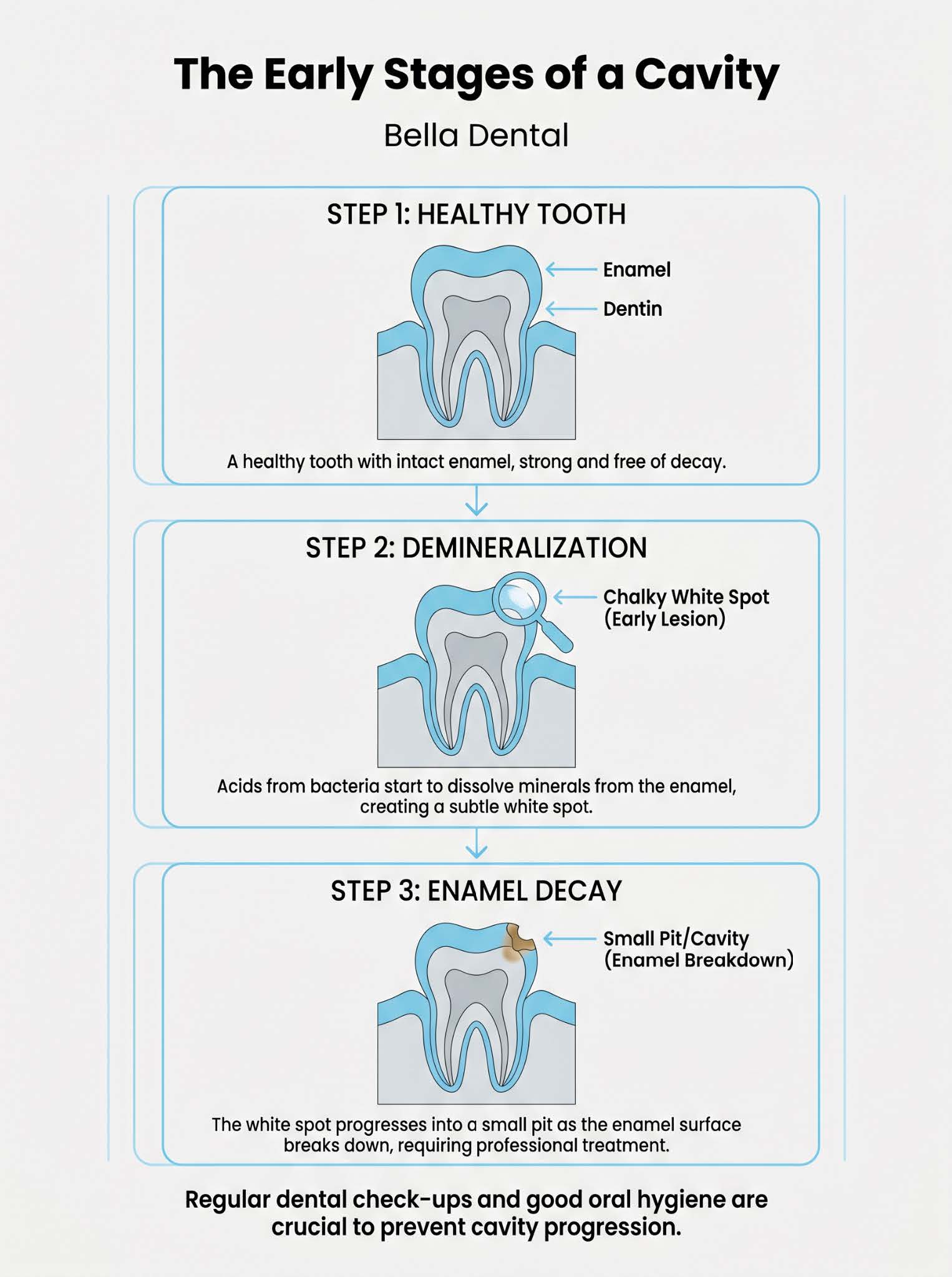
What Does the Beginning of a Cavity Look Like?
What Does the Beginning of a Cavity Look Like?
Maintaining a healthy smile requires vigilance and a proactive approach to oral hygiene. Brushing an...

The sound of a dental drill is, for many people, the soundtrack of dental anxiety. It’s a high-pitched, vibrating noise that has become synonymous with the treatment of cavities. For decades, the traditional drill has been the standard tool for removing tooth decay, a reliable and effective workhorse of restorative dentistry. While it has served its purpose well, the dental experience it creates can be a source of significant stress and apprehension for patients.
Dental anxiety can lead people to delay or avoid necessary dental care, potentially allowing minor issues to become more serious problems. The desire for a more comfortable, less intimidating dental experience has driven innovation in the field, leading to the development of new technologies designed to change the way we think about dental procedures.
One of the most significant of these advancements is the use of lasers in dentistry. Laser technology offers a fundamentally different approach to cavity treatment, replacing the mechanical cutting of a drill with the focused energy of light. This modern method promises a quieter, less invasive, and often pain-free experience. But beyond the improved patient comfort, a critical question remains: is laser dentistry as effective as the traditional drill for treating cavities?
At Bella Dental, we have embraced this technology, incorporating the advanced Solea Laser into our practice. We believe in offering our patients the best of both worlds: advanced technology that enhances comfort without compromising the quality and effectiveness of the treatment.
The traditional dental drill, or handpiece, is a mechanical instrument that uses a small, rotating bur to remove decayed tooth structure. It operates at high speeds, allowing the dentist to precisely cut away the softened, infected parts of the tooth, preparing it to be filled. The process is highly effective and has been refined over many years.
However, the friction and vibration created by the drill can generate heat and pressure, which is why a local anesthetic is almost always required to numb the tooth and surrounding tissues. The sound and sensation of the drill are often the primary sources of patient anxiety. It is a reliable tool, but one that many patients would be happy to avoid if possible.
Laser dentistry operates on a completely different principle. Instead of mechanical cutting, it uses a highly concentrated beam of light energy to treat the tooth. For cavity treatment, the laser is calibrated to a specific wavelength that is absorbed by water molecules within the decayed portion of the tooth.
The laser energy vaporizes the water and the decayed tooth structure, effectively removing the infection without touching the surrounding healthy tooth. This process is incredibly precise, allowing the dentist to preserve more of the natural tooth structure compared to a traditional drill.
At Bella Dental, we utilize the Solea Laser, a state-of-the-art CO₂ dental laser. The Solea is unique in its ability to treat both hard and soft tissues, making it a versatile tool for a variety of procedures. For cavity treatment, its specific wavelength allows for fast, efficient, and exceptionally precise removal of decay. The laser energy also has a sterilizing effect, cleaning the area as it works and reducing the risk of future bacterial growth. This can lead to a healthier tooth environment and a lower chance of recurrent decay under the filling.
When it comes to the primary goal of cavity treatment—the complete removal of decay—both laser dentistry and traditional drills are highly effective. The choice between them often comes down to other factors, including patient comfort, precision, and the specific circumstances of the cavity.
Here is a comparison to help illustrate the differences:
| Laser Dentistry (Solea) | Traditional Drill | |
|---|---|---|
| Patient Comfort | Minimal vibration and noise. Often requires no anesthesia. | High-pitched noise and vibration. Almost always requires anesthesia. |
| Precision | Extremely precise, preserving more healthy tooth structure. | Effective, but can sometimes remove more tooth structure than necessary. |
| Bleeding | Minimal to no bleeding as the laser cauterizes tissue. | Can cause some bleeding, especially near the gum line. |
| Recovery | Typically faster and more comfortable. | May involve some post-procedure soreness or sensitivity. |
| Anxiety Level | Significantly lower for most patients, especially children. | A common source of dental anxiety. |
The most profound difference between laser dentistry and the traditional drill is the patient experience. For many, the Solea Laser transforms the process of getting a filling. The absence of the drill’s noise and vibration immediately creates a calmer atmosphere. More importantly, a significant number of patients treated with the Solea Laser do not require any anesthesia. This means no needle, no injection, and no lingering numbness after the appointment.
This “anesthesia-free” experience is a major benefit, especially for anxious patients or children. It allows for a quicker, more comfortable appointment and enables you to return to your day without the inconvenience of a numb mouth. The ability to treat cavities without the drill and the needle is changing the way people feel about visiting the dentist, making it a less stressful and more positive experience. It can be a particularly good option for patients who have a fear of needles.
While laser dentistry is an excellent option for many cavity treatments, there are still situations where a traditional drill may be the preferred or necessary tool.
For example, removing old metal amalgam fillings often requires a drill, as the laser is not effective on metal. Very large or deep cavities that are close to the nerve may also be better addressed with traditional methods to ensure the nerve is not irritated.
Additionally, some procedures, like preparing a tooth for a crown, still rely on the precision shaping that a drill provides.
During your consultation at Bella Dental, Dr. Mahyar Cohen will assess your specific needs and recommend the best treatment approach for you. Our practice is equipped with both advanced laser technology and traditional tools, so we can always choose the most effective and appropriate method for your situation. We believe in a hybrid approach, using the best tool for each specific task to ensure the highest quality of care.
Laser dentistry represents a new era in restorative dental care, one where effectiveness is matched by an unparalleled level of patient comfort. The ability to treat cavities without the noise, vibration, and often the need for anesthesia is a true paradigm shift.
At Bella Dental, we are proud to offer the benefits of the Solea Laser to our patients in Oxnard. We are committed to investing in technology that not only improves clinical outcomes but also transforms the patient experience.
If dental anxiety has kept you from seeking the care you need, we invite you to learn more about how laser dentistry can change your perspective. Contact us today to schedule a consultation.
Most patients report feeling little to no sensation during laser cavity treatment. The procedure is so comfortable that it often does not require any numbing injections.
Yes, laser dentistry is very safe when performed by a trained and experienced dentist. The laser is a precise instrument that allows for controlled and targeted treatment.
Absolutely. Laser dentistry is an excellent option for children, as it is quieter, less intimidating, and often eliminates the need for a needle, making for a much more positive dental experience.
While the initial investment in laser technology is significant, the cost to the patient is often comparable to a traditional filling. We can discuss all costs and payment options with you during your consultation.
What Does the Beginning of a Cavity Look Like?
What Does the Beginning of a Cavity Look Like?
Maintaining a healthy smile requires vigilance and a proactive approach to oral hygiene. Brushing an...

Will Cavities and Tooth Decay Go Away on Their Own?
Will Cavities and Tooth Decay Go Away on Their Own?
When you first notice mild tooth sensitivity or a small dark spot on your tooth, it’s tempting to wa...

What is the Best TMJ Treatment?
What is the Best TMJ Treatment?
Jaw pain, clicking sounds when you chew, and persistent headaches can be more than just a minor anno...
Call Bella Dental at (805) 394-3000 for more information on booking an appointment, or fill out the form below and we will reach out to you!
