


Why Do I Need Fillings In My Teeth?
Why Do I Need Fillings In My Teeth?
Many patients wonder: Why do I need fillings in my teeth? Dentists often hear this question during r...
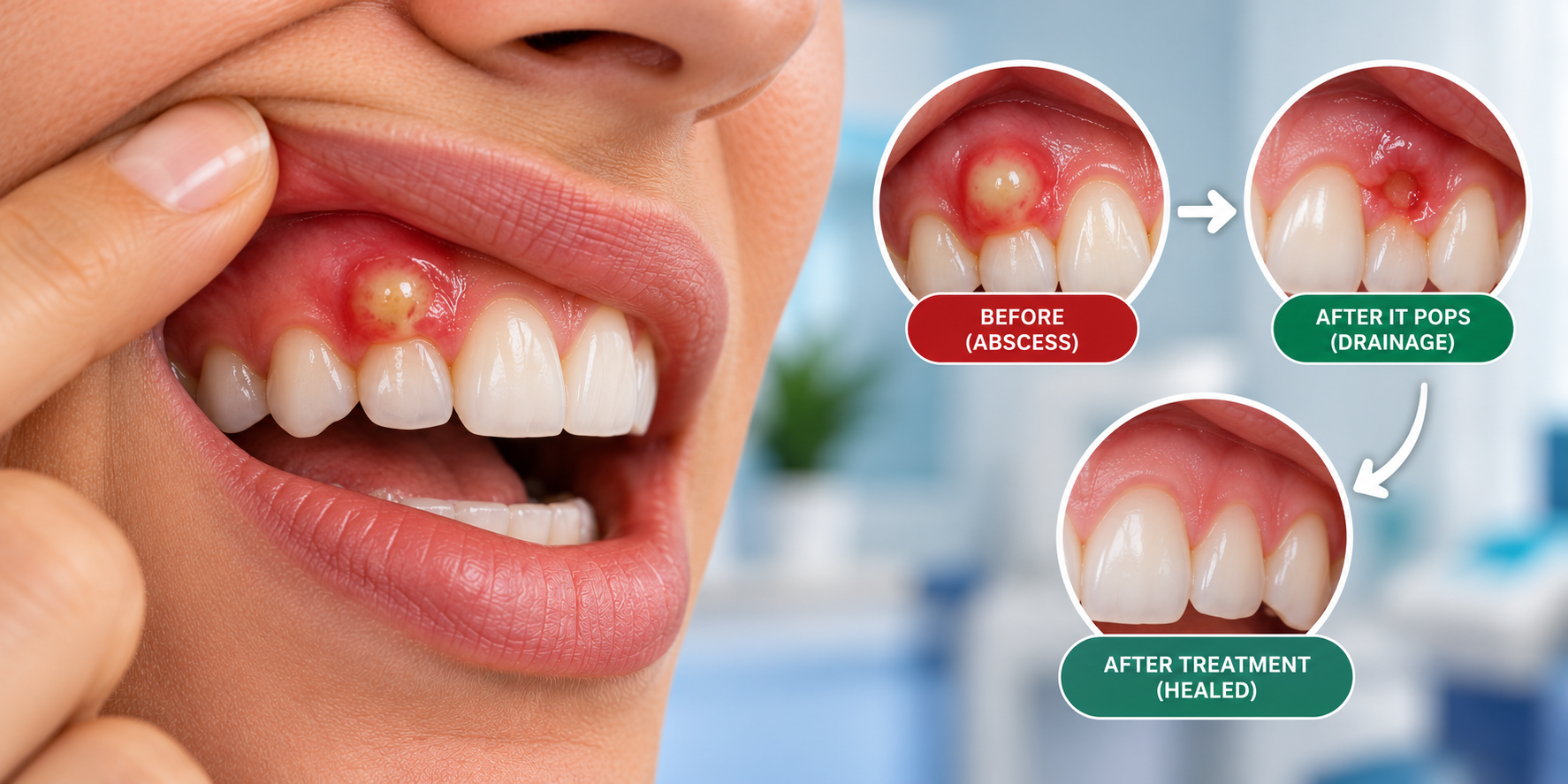
A dental abscess can build pressure quickly. If it suddenly bursts, you may notice a rush of fluid, a bad or salty taste, and a drop in pain. That relief can feel reassuring, but the infection has not necessarily gone away.
If your abscess popped at home, rinse your mouth gently and contact a dentist as soon as you can. A burst abscess has drained some pus, but bacteria can remain inside the tooth, gum, or nearby tissue. The source still needs treatment.
At Bella Dental, we provide emergency dental services for infections, swelling, severe tooth pain, and other urgent problems. We can examine the area, take digital X-rays when needed, and work out where the infection started. This guide explains what to do after an abscess bursts, which symptoms need emergency care, and how we may treat the infection so it does not keep coming back.
If a dental abscess bursts on its own, the next steps are simple:
Drainage may reduce pressure, but a dental abscess still needs professional treatment.
Adental abscess is a pocket of pus caused by infection. Pressure can build until the pocket finds a way to drain. You may notice fluid in your mouth and a sudden drop in throbbing pain.
Much of the pain comes from pressure around the infected area. When pus drains, that pressure drops and you may feel much better.
The change can be misleading. Bacteria can remain in the tooth, gum, or bone, and the opening may close again.
Drainage can taste bitter, salty, or unpleasant. You may notice yellow, white, or blood-tinged fluid. Bad breath can also appear around an infected tooth or gum.
Spit the fluid out rather than swallowing it on purpose. Rinse gently afterward and arrange dental care.
A tooth abscess usually starts inside a tooth or near its root. Deep decay, a crack, or an injury can let bacteria reach the tissue inside.
If it burst at home, the drainage does not repair the infected tooth. A root canal may be needed if the tooth can be saved. If it is too damaged to repair, extraction may be the safer option.
We may use digital X-rays to see the root and the bone around it. That helps us find the source of the infection and choose the right treatment.
A gum abscess forms in the tissues around a tooth and can look like a swollen bump. Gum disease or infection around a damaged tooth can lead to this type of abscess. If it bursts at home, the area may drain and look flatter for a while. The pocket of infection still needs to be checked. We may need to clean the area, drain any remaining pus, or treat gum disease around the tooth.
Pain that returns after the bump closes is another sign that the infection is still there.
No. Do not squeeze an abscess, pierce it with a needle, or try to cut the gum. You can injure the tissue and push bacteria into nearby areas.
A dentist can drain and clean an abscess safely when needed, then treat the source of infection. If a swollen gum bump has not burst, leave it alone and arrange urgent dental care.
Gentle care can keep the area more comfortable while you wait for your appointment. Warm salt water can rinse away drainage and food. Do not use very hot water because sore tissue can be sensitive.
Mix salt into warm water and swish it around the mouth without force. Spit it out afterward. A gentle rinse can help keep the area clean, but it will not remove the infection.
You can repeat the rinse during the day if it feels soothing. Stop if the area becomes more irritated.
Keep brushing the rest of your teeth as normal. Around the draining area, use a soft toothbrush and light pressure. Avoid digging into the opening or trying to remove tissue.
Good oral care helps reduce extra plaque around the area while you wait for treatment.
Pain relief after drainage does not mean the abscess has healed. A burst abscess can cause a sudden rush of bad-tasting fluid and some relief, but dental care is still needed.
An infected nerve can also stop sending pain signals if it dies. That can make a serious tooth seem better even though bacteria remain. Waiting gives the infection more time to damage nearby tissue or spread.
If the abscess has burst and you now feel fine, still arrange an urgent dental visit.
A dental abscess can spread beyond the tooth or gum. Certain symptoms call for emergency medical care rather than waiting for a dental appointment.
Swelling in the mouth, jaw, or neck can become dangerous if it affects your airway. Go to an emergency room if breathing or swallowing becomes difficult.
Do not wait to see if the swelling improves on its own.
Swelling that is moving across the face, toward the eye, or down the neck needs urgent attention. A high fever, confusion, or feeling severely unwell can also point to a more serious infection.
Call emergency services if symptoms are severe or getting worse quickly.
We examine the tooth and gum and may take digital X-rays to find where the infection started. Treatment then focuses on removing the source.
If pus is still trapped, we may need to drain and clean the area. Drainage alone may not solve the cause, so further treatment often follows.
If infection started inside a tooth that can still be saved, root canal treatment may be an option. The infected tissue is removed from inside the tooth. The space is then cleaned and sealed.
A crown may be needed later to protect the tooth.
Severe damage can leave too little healthy tooth for repair. In that case, extraction may be needed to remove the source of infection.
We can talk about replacement choices once the area is healthy and healing.
Antibiotics may be prescribed if infection has spread beyond the abscess or if there are other health concerns. They are not always needed for a dental abscess.
Even when antibiotics are used, treatment of the tooth or gum may still be required. Medicine alone may not remove the source.
Yes. A burst abscess can fill again if the source of infection remains. The opening may close while bacteria continue to collect underneath. You may notice the bump returning, pain building again, or another bad taste as it drains.
Repeated swelling strongly suggests the problem needs treatment. The goal is to treat the infection at its source so you are not stuck in a cycle of swelling, drainage, and pain.
If a dental abscess has burst, the drop in pressure can make you feel much better. The infection may still be active, so the next step is a dental exam rather than waiting for swelling to return.
At Bella Dental in Oxnard, ouremergency dental services include care for tooth pain, swelling, pus, and dental infections. We aim to offer same-day appointments when possible and can use digital X-rays to help find the source.
Book an emergency dental appointment with us if an abscess has burst, even if the pain has eased. If you have trouble breathing or swallowing, rapidly spreading swelling, or severe illness, seek emergency medical care instead.
Spit out the drainage, rinse gently with warm salt water, and contact us for an urgent appointment. Do not squeeze the area or assume the infection has cleared because the pain has improved.
Draining can lower pressure and make the area feel better, but it does not mean the infection is gone. The tooth or gum still needs dental treatment.
Yes. A gentle warm salt water rinse can help clean the area and soothe sore tissue. It cannot cure the infection, so dental care is still needed.
A small amount may be swallowed by accident when an abscess drains. Rinse your mouth and arrange dental care. If you feel very unwell or develop serious symptoms, seek medical help.
Antibiotics can be useful when an infection has spread, but they may not remove the source inside a tooth or gum. You may still need drainage, root canal treatment, gum treatment, or extraction.
Why Do I Need Fillings In My Teeth?
Why Do I Need Fillings In My Teeth?
Many patients wonder: Why do I need fillings in my teeth? Dentists often hear this question during r...

What Should You Expect During an Emergency Dentist Visit?
What Should You Expect During an Emergency Dentist Visit?
A dental emergency rarely happens at a convenient time. It often arrives suddenly, bringing with it ...

The Top 5 Things That Make TMJ Worse
The Top 5 Things That Make TMJ Worse
If you have TMJ disorder, you know how frustrating it can be. Jaw pain, clicking sounds, and difficu...
Call Bella Dental at (805) 394-3000 for more information on booking an appointment, or fill out the form below and we will reach out to you!
