



What Is the Best Way To Clean Teeth?
What Is the Best Way To Clean Teeth?
Daily brushing is a familiar routine, but understanding the most effective way to clean your teeth c...
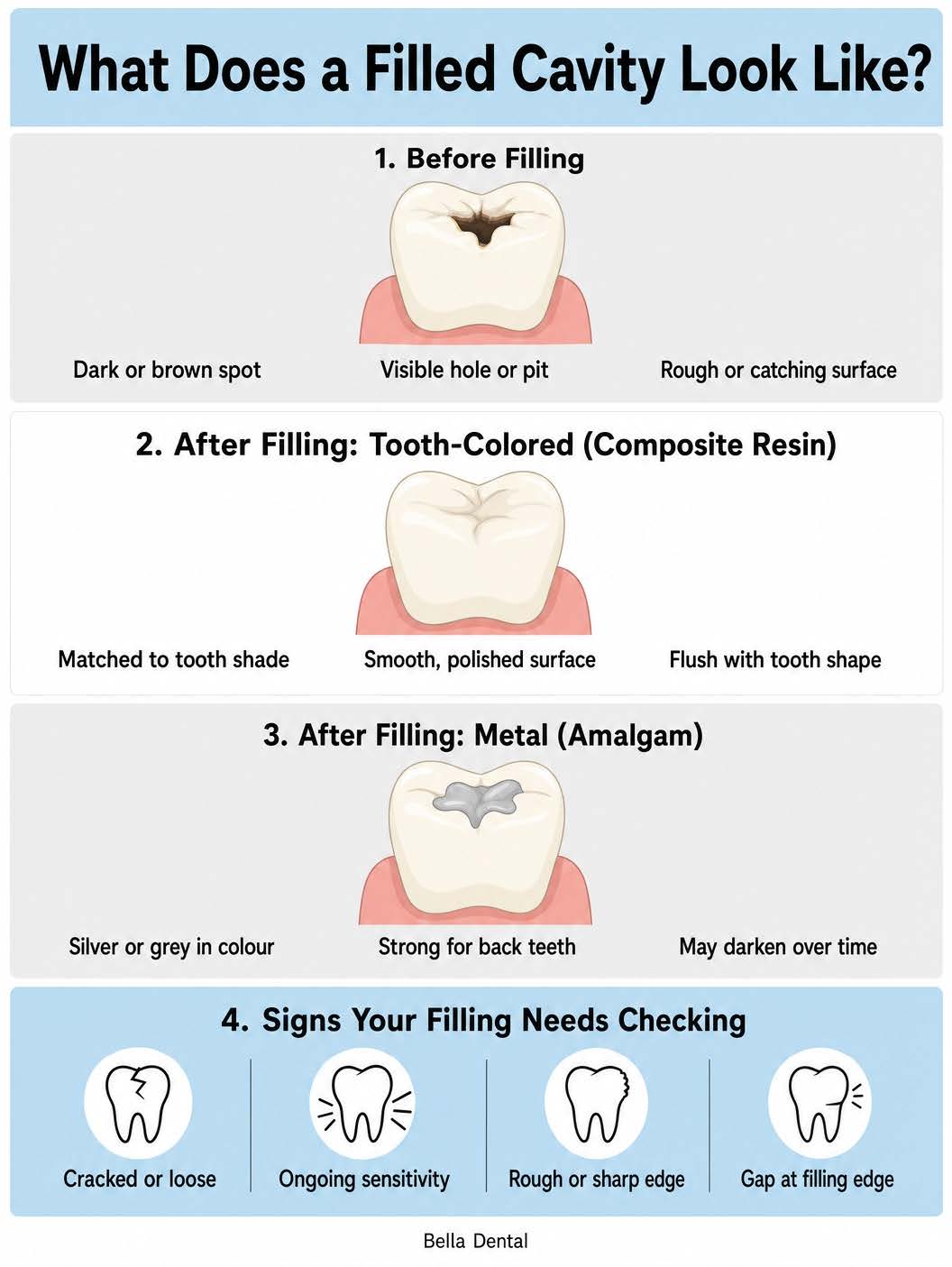
A cavity can look different before and after dental filling treatment, which is why many patients search for photos or explanations before their appointment. Some people picture a dark hole in the tooth. Others worry that a filling will stand out every time they smile. The truth is that a filled tooth may look almost unchanged, especially when tooth-colored material is used. The main goal is to remove decay, restore the missing area, and give the tooth a smoother, stronger surface for daily chewing.
What does a filled cavity look like? The answer depends on the filling material, the tooth’s location, the size of the cavity, and how much healthy tooth structure remains. A small front tooth filling may blend closely with enamel. A larger back tooth filling may be more visible when you open wide. Older metal fillings can look silver or gray.
This blog explains what a cavity looks like, what the filling process looks like, and what to expect once your tooth has been repaired.
What does a filled cavity look like after treatment? In many cases, it looks like a smooth patch that follows the shape of the tooth. With composite resin, the dentist matches the material to your natural tooth shade, so the repair may be hard to notice in normal conversation. The surface should feel polished, shaped, and comfortable when you bite.
A metal filling looks different. Amalgam fillingsare silver-toned and may darken over time. They are more noticeable than tooth-colored fillings, but they can be strong in back teeth that handle chewing pressure. Glass ionomer fillings may look more matte and are sometimes used in certain areas or for children.
A filled tooth should not have a rough edge, sharp spot, open hole, or loose material. The bite should feel balanced. Mild sensitivity can happen for a few days, but ongoing pain, pressure, or a high feeling when biting should be checked.
Patients often ask what a cavity looks like because decay is not always obvious. A cavity may look like a brown, black, gray, or white spot. It may appear as a visible hole, a dark line in a groove, or a rough area near the gumline. Food may catch in the same place again and again.
Some cavities cannot be seen at home. Decay between teeth may be hidden until a dentist checks with X-rays. Early enamel changes may appear as chalky white spots before a hole forms. A tooth can also have decay under an old filling or near the edge of dental work.
What do cavities look like in the back teeth? Molars may show dark staining inside grooves, but not every dark groove is decay. A dentist can tell the difference between stain, early decay, and a cavity that needs treatment.
What does a cavity look like after it’s filled? The decayed area is gone, and the space is sealed with filling material. If the filling is tooth-colored, the repaired section should blend with the tooth as much as possible. The dentist shapes the material so it follows the natural curves and chewing surface.
For front teeth, a composite tooth filling may be color-matched and smoothed so the edge is subtle. For molars, the filling may recreate grooves and ridges that help with chewing. A larger cavity filling may be more noticeable because more tooth structure needed repair.
The tooth may feel slightly different at first. Your tongue is sensitive to small changes, so even a smooth filling may feel new for a few days. That feeling should settle. A rough edge, catching floss, or pain when biting deserves a follow-up.
What does a filled-in cavity look like when composite resin is used? It often looks like a natural part of the tooth. Composite resin can be shaded to match nearby enamel, which makes it a popular choice for visible areas.
During placement, the material is added in layers, shaped, hardened with a special light, and polished. The final result should sit flush with the tooth. It should not look like a raised blob or a sunken patch.
Tooth-colored fillings can stain over time, especially near the edges. Coffee, tea, red wine, tobacco, and plaque buildup may change the appearance. Regular cleanings and good home care can help the filling keep a cleaner look.
Composite fillings are durable, but they are not indestructible. Grinding, chewing ice, biting hard objects, or untreated decay around the filling can shorten their lifespan.
What does getting a cavity filled look like during the appointment? At Bella Dental, the process starts with an exam and digital X-rays when needed. The dentist checks the tooth, explains the treatment options, and helps choose the right filling material based on the cavity, bite, and location.
The area is numbed with local anesthetic so the tooth can be treated comfortably. Once the area is numb, the dentist removes the decayed or damaged portion of the tooth. The space is cleaned thoroughly before the filling material is placed.
For composite resin, the material is added in layers and hardened with a special light. The dentist then shapes and polishes the filling. Your bite is checked before the appointment ends, and small adjustments can be made so the filled tooth meets the opposite tooth correctly.
What does it look like to get a cavity filled from the patient’s view? You may see dental instruments, a bright exam light, suction, cotton or isolation materials, and the filling material being prepared. You should not see the inside of the tooth during treatment unless the dentist shows you an image.
Many patients feel pressure or vibration rather than pain. The numbing medication keeps the area comfortable. The appointment is often completed in one visit, and many fillings take less than an hour.
After treatment, part of your mouth may stay numb for a short time. Eating should wait until numbness wears off so you do not bite your cheek or tongue. Soft foods may feel better at first. Very hard or sticky foods should be avoided during the first day if your dentist gives that guidance.
A healthy tooth filling should feel smooth and stable. Floss should pass between teeth without shredding or snapping. Your bite should feel natural, with no single tooth hitting first.
Temperature sensitivity can happen after a filling. Cold drinks, warm foods, or chewing pressure may feel different for a few days. Sensitivity should slowly improve. Pain that gets worse, wakes you up, or lingers after hot or cold foods may mean the tooth needs another evaluation.
A filling that feels too high can make chewing uncomfortable. This can happen when numbness makes it hard to judge your bite during the appointment. A quick adjustment can often correct the pressure.
A filled cavity should not look cracked, loose, or lifted at the edge. You should not see a gap between the filling and the tooth. Dark staining around an old filling can happen, but it may need a dentist’s review to check for leakage, wear, or new decay.
A broken filling may feel sharp or rough. Food may start getting stuck in a spot that used to feel smooth. Floss may catch or tear. These changes can allow bacteria to collect around the repair.
Old fillings can wear down over time. Most fillings last for several years with good oral care and regular checkups, but they may need replacement if they loosen, crack, or no longer protect the tooth well.
A cavity filling still needs daily care. Brush twice a day with fluoride toothpaste, clean between teeth once a day, and keep up with regular dental visits. A filled tooth can develop new decay around the filling edge if plaque stays in place.
Be careful with habits that stress fillings. Chewing ice, biting pens, opening packages with teeth, and grinding can damage both fillings and natural tooth structure. If you grind at night, ask your dentist whether a night guard may help.
Good care also includes watching for changes. Sensitivity, a rough edge, a loose feeling, or pain when biting should be checked. Early repair is often easier than waiting until a filling breaks or decay spreads deeper.
What does a filled cavity look like when treatment goes well? It should look clean, shaped, and fitted to the tooth. A tooth-colored filling may blend closely with enamel, while a metal filling may look silver or gray. The repair should feel smooth, stable, and comfortable when you chew.
A filling can protect a tooth after decay is removed, but it still needs brushing, flossing, and regular checkups. Bella Dental offers dental fillings for teeth affected by decay or minor fractures, with careful shaping, polishing, bite checks, and aftercare guidance.
If you have a cavity, an old filling that looks worn, or sensitivity around a tooth, schedule a dental fillings appointment with Bella Dental today.
A filled cavity usually looks like a smooth repaired area on the tooth. Tooth-colored fillings can blend with enamel, while metal fillings look silver or gray.
After a cavity is filled, the hole or damaged area should be sealed. The tooth surface should look shaped, polished, and free of rough edges.
A filled-in cavity may look like a natural part of the tooth when composite resin is used. Larger fillings or metal fillings may be more visible.
The appointment often includes numbing, decay removal, cleaning, filling placement, shaping, polishing, and a bite check.
You may see dental tools, suction, an exam light, and filling material. Most of the detailed work happens inside the mouth and is not easy to see.
A cavity may look like a dark spot, visible hole, chalky white area, rough patch, or dark line in a groove. Some cavities are hidden between teeth.
Cavities on molars may look like dark grooves, pits, holes, or rough spots. A dentist can tell the difference between staining and decay.
A tooth filling can last several years, depending on the material, bite pressure, home care, and regular dental checkups.
What Is the Best Way To Clean Teeth?
What Is the Best Way To Clean Teeth?
Daily brushing is a familiar routine, but understanding the most effective way to clean your teeth c...

Does Invisalign Work for Crooked Teeth?
Does Invisalign Work for Crooked Teeth?
If you have crowded, overlapping, or rotated teeth, you may wonder whether clear aligners can give y...

Can You Get Dental Crowns for Front Teeth?
Can You Get Dental Crowns for Front Teeth?
When most people think about dental crowns, they picture repairing molars or strengthening teeth in ...
Call Bella Dental at (805) 394-3000 for more information on booking an appointment, or fill out the form below and we will reach out to you!
