


Dental Inlays and Onlays Explained
Dental Inlays and Onlays Explained
When a tooth has been damaged by decay or trauma, restoring its strength, function, and appearance i...
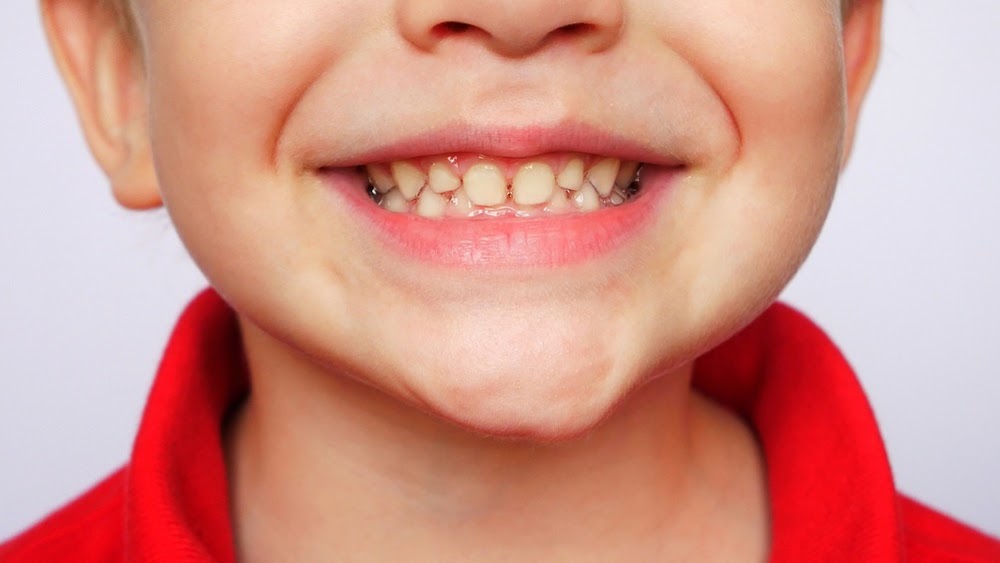
Baby teeth are small, bright, and easy to miss during a quick brushing routine. A tiny white patch near the gumline or a small brown mark in a groove can seem harmless at first, especially if your child is eating normally and not complaining about pain. Cavities on baby teeth can be subtle early on, then change quickly because baby tooth enamel is thinner than adult enamel.
What do cavities look like on baby teeth? Early decay may appear as chalky white spots, dull patches, or pale lines near the gums. As the cavity grows, the area may turn yellow, light brown, dark brown, or black. A deeper cavity may look like a visible hole, pit, rough edge, or broken area on the tooth.
At Bella Dental in Oxnard, dental fillings can repair teeth damaged by decay after the damaged portion is removed and the tooth is cleaned. Early care matters because a small cavity is usually simpler to treat than decay that spreads deeper into the tooth.
The look of a cavity will change as decay progresses. A parent may see a faint color change before a child feels pain. A dentist may detect a cavity even earlier during an exam or X-ray.
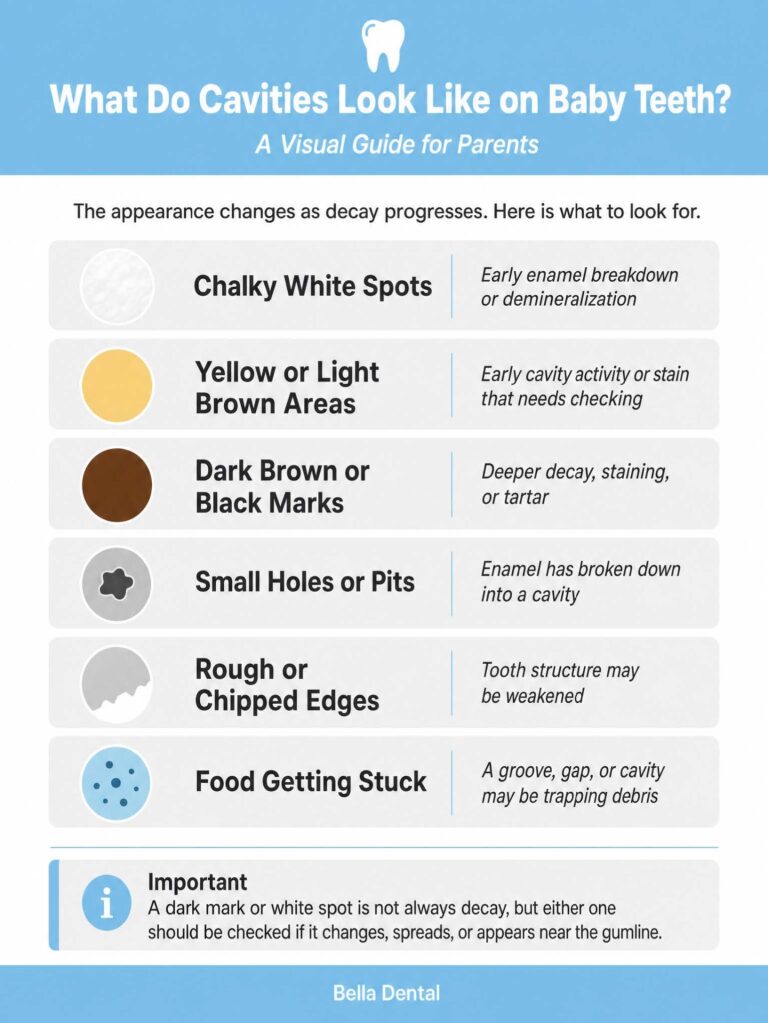
Baby teeth can develop cavities as soon as they come in. Decay happens when bacteria in the mouth use sugars and carbohydrates to make acids. Those acids weaken enamel over time. If the process continues, an early cavity can become a hole in the tooth.
Children may be at higher risk if they sip milk, formula, juice, or sweet drinks over long periods, snack often, or struggle with brushing.
Baby teeth matter even though they eventually fall out. They help children chew, speak, and hold space for adult teeth.
An early cavity on a baby tooth may not look like a hole. It may look like a chalky white patch, a dull spot, or a faint line close to the gums. On front teeth, the marks may appear near the gumline. On back teeth, they may hide in grooves or between teeth.
The white color can be hard to notice because baby teeth are naturally light. Look for areas that seem less shiny than the rest of the tooth.
Early decay may be painless. Your child may eat, talk, and sleep normally, which is why regular dental visits are so important.
Brown or black spots can be more concerning, especially if the area looks rough, sunken, sticky, or larger over time.
Staining can also create dark marks. Iron supplements, certain foods, drinks, tartar, or trauma can change tooth color. A tooth that turns gray, brown, or black after a fall or bump should be evaluated because the inner tooth may have been injured.
The safest approach is a dental exam. Your dentist can tell whether the spot is stain, tartar, trauma, or tooth decay.
Cavities between baby teeth can be harder to spot at home. You may not see a hole because the decay is hidden where two teeth touch. Parents may notice floss shredding, food getting stuck, a dark shadow between teeth, or a bad-smelling area even after brushing.
Back teeth are especially prone to hidden decay because their chewing surfaces have grooves and the spaces between them can trap food.
Dental X-rays help detect decay between teeth before it becomes visible on the outside. That can make treatment simpler and help preserve more natural tooth structure.
A cavity does not always cause symptoms, but behavior can offer clues. Your child may complain about a tooth hurting, avoid cold drinks, react to sweets, chew on one side, or say food keeps getting stuck.
Some children do not have the words to explain tooth sensitivity. They may refuse certain foods, touch their cheek, or become fussy during brushing.
Visible signs and symptoms both matter. A small spot with no pain can still be active decay. Pain can also happen before a parent sees an obvious hole.
Dental fillings repair teeth damaged by decay or minor fractures. During treatment, the decayed or damaged part of the tooth is removed, the area is cleaned, and a tooth-safe material is placed to restore the tooth’s shape and function.
At Bella Dental in Oxnard, filling options may include composite resin, amalgam, or glass ionomer. Composite resin is tooth-colored and can blend with natural teeth. Amalgam is strong and may be used in back teeth. Glass ionomer is often used for children or areas that do not take heavy chewing pressure, and it can release fluoride.
The right filling material is chosen based on the tooth, cavity size, bite pressure, and your child’s needs.
Some parents wonder if a cavity in a baby tooth can wait because the tooth will fall out later. Waiting can create bigger problems. Decay can spread deeper into the tooth, reach the nerve, cause pain, or lead to infection.
Baby teeth also guide adult teeth into position. If a baby tooth is lost too early, nearby teeth can drift, leaving less room for the permanent tooth. This can affect spacing and future dental alignment.
A small filling can often protect a baby tooth until it falls out naturally. Delaying care can lead to more involved treatment.
A filling visit includes an exam. Your Bella Dental dentist may take X-rays to check the tooth and confirm how deep the decay goes. If a filling is needed, the area is numbed to keep your child comfortable.
The dentist removes the damaged part of the tooth, cleans the space, places the filling material, shapes it, and checks the bite. Many fillings can be completed in one visit.
Afterward, mild sensitivity may happen for a few days. Children should wait until numbness wears off before eating, since a numb cheek or lip can be bitten by accident.
At-home checks are not a replacement for dental exams, but they can help parents notice changes earlier. Use good lighting and gently lift the lip to look along the gumline.
Watch for chalky white spots, yellow or brown marks, dark pits, rough edges, swelling near the gum, or a tooth that looks different from the others.
If a spot changes, grows, or comes with pain, sensitivity, or swelling, schedule a dental visit.
What do cavities look like on baby teeth? They may appear as chalky white spots, then turn yellow, brown, dark, rough, or hollow as decay progresses. Since some cavities hide between teeth or cause no early pain, a dental exam is the clearest way to know what is happening.
Bella Dental in Oxnard provides dental fillings that restore teeth damaged by decay and help protect normal chewing and appearance. Early treatment can keep a small cavity from becoming a painful problem.
Schedule an appointment at Bella Dental in Oxnard if you notice a spot, hole, sensitivity, or any change in your child’s baby teeth.
Cavities on baby teeth may look like chalky white spots, yellow or brown marks, dark pits, visible holes, or rough broken areas.
An early cavity may look like a dull white patch, a pale line near the gum, or a light brown area before a hole appears.
Yes. Early enamel breakdown can look white and chalky before the tooth turns brown or forms a visible hole.
No. Dark spots can come from stains, tartar, trauma, or decay. A dentist can identify the cause.
Cavities may not hurt at first. Pain, sensitivity, changes in chewing, or swelling can occur as decay deepens.
Yes, baby teeth may need fillings when decay has created a cavity. Treating the tooth can prevent pain and infection.
Once a true cavity forms, it needs dental treatment. Very early enamel changes may be managed if a dentist catches them soon.
Call if you see white spots, brown marks, holes, swelling, pain, sensitivity, or food getting stuck in the same place.
Dental Inlays and Onlays Explained
Dental Inlays and Onlays Explained
When a tooth has been damaged by decay or trauma, restoring its strength, function, and appearance i...

How Much Do Dentures Cost?
How Much Do Dentures Cost?
Dentures can make a major difference when missing teeth affect eating, speaking, smiling, or daily c...

How to Clean Mouth Guard Like a Pro
How to Clean Mouth Guard Like a Pro
If you wear a night guard to protect your teeth from grinding or to help with TMJ symptoms, you know...
Call Bella Dental at (805) 394-3000 for more information on booking an appointment, or fill out the form below and we will reach out to you!
