



Will Cavities and Tooth Decay Go Away on Their Own?
Will Cavities and Tooth Decay Go Away on Their Own?
When you first notice mild tooth sensitivity or a small dark spot on your tooth, it’s tempting to wa...

Root canals are often misunderstood, and the fear surrounding them typically comes from outdated ideas about how the procedure feels. Today’s dental techniques focus heavily on patient comfort, allowing treatment to be completed smoothly and with minimal discomfort. When performed by an experienced provider using modern tools, a root canal is often no more uncomfortable than receiving a standard dental filling.
Understanding what the procedure involves, why it is needed, and what you can expect before and after treatment can make the experience much easier. This blog explores what happens during a root canal, how dentists manage discomfort, and why preserving the natural tooth is beneficial for long-term oral health.
A root canal is performed to remove infected or inflamed dental pulp from inside a tooth. The discomfort people feel before treatment does not come from the procedure itself. Instead, it comes from the infection within the tooth.
When bacteria reach the pulp chamber, pressure builds as inflammation increases. This can lead to:
This discomfort is a sign that the pulp is compromised. Because the infection can spread beyond the root and into surrounding bone, timely treatment is important for both comfort and long-term oral health. A root canal relieves this pain by removing the source of the infection.
Most patients are surprised by how comfortable a modern root canal feels. Dentists use local anesthesia to numb the area, preventing pain throughout the procedure. Pressure or slight movement may be noticeable during treatment, but you should not feel sharp discomfort.
Many patients report that the procedure is easier than expected because:
Anxiety about the unknown can make a root canal feel intimidating, but the actual experience is usually far more comfortable than people anticipate.
The primary goal of a root canal is to save a natural tooth that would otherwise need to be removed. Keeping the natural tooth has several advantages, including:
A natural tooth supports proper biting, chewing, and speaking. Preserving it allows you to continue using it comfortably once treatment is complete.
Losing a tooth can cause nearby teeth to shift, leading to uneven wear and changes in bite alignment.
A natural root stimulates the jawbone, helping maintain bone density. When a tooth is removed, bone loss can occur over time.
Replacing a tooth with an implant or bridge requires more appointments, additional procedures, and higher long-term costs.
Root canal therapy typically costs less than tooth replacement options and helps prevent the need for more extensive treatment later.
Saving a natural tooth remains one of the most beneficial steps for long-term dental stability and overall oral function.
Knowing what to expect can reduce fear and help you feel more confident about the procedure. A modern root canal involves several well-planned steps to ensure safety and comfort.
Dentists begin by examining the tooth and taking digital X-rays. These images reveal the shape of the root canal system, the extent of infection, bone involvement, and any abscesses. Digital imaging also enhances visibility while keeping radiation exposure low.
Once the treatment plan is clear, the dentist administers local anesthesia. This ensures the tooth and surrounding tissues are fully numb, allowing the procedure to take place comfortably.
A small rubber barrier is placed around the tooth to keep it clean and dry. This barrier also improves precision by blocking saliva and providing a clear working area.
A small opening is made on the top of the tooth. Specialized tools remove infected pulp and tissue from inside the canals. This step relieves internal pressure and eliminates the source of pain.
Once the canals are cleared, the dentist thoroughly cleans and disinfects the inside of the tooth. Antimicrobial solutions are used to eliminate bacteria and prevent reinfection.
After the canals are shaped and cleaned, they are filled with a biocompatible material called gutta-percha. This material seals the space, blocking bacteria from re-entering the canals.
A tooth that has undergone a root canal is more vulnerable to fractures. A dental crown is placed to strengthen the tooth and restore its appearance, function, and structure.
Each step is designed to protect the natural tooth and prevent future problems.
Some mild discomfort is normal after the anesthesia wears off. This is typically caused by temporary inflammation around the treated area. Most patients experience:
These sensations usually improve within a few days. Over-the-counter pain relievers are often enough to manage symptoms while the area heals.
A root canal should significantly reduce the intense pain caused by the infection, and post-procedure discomfort should be manageable and short-lived.
Food choices play an important role in recovery. Until a crown or final restoration is placed, the tooth should be treated gently. For best results:
Chewing on the opposite side of the mouth during the early days of healing can also prevent unnecessary pressure on the treated tooth.
Good aftercare is essential for a smooth recovery and long-term success.
Your dentist may recommend ibuprofen or acetaminophen to reduce discomfort. Following dosage instructions helps control inflammation.
Cold compresses during the first two days can minimize swelling. After that, warm compresses often help relax the jaw muscles.
You can brush and floss gently around the area after the first day. Keeping the mouth clean supports healing and prevents further issues.
Warm saltwater rinses can soothe the area and help keep tissues clean.
Contact the dental office if you experience:
These concerns may indicate the need for additional evaluation.
Advances in dental technology have transformed root canal therapy. Digital imaging, rotary instruments, improved anesthetics, and precise sealing materials all contribute to a more controlled and comfortable experience. Dentists also emphasize communication, helping patients understand each part of the process so they feel supported throughout treatment.
Today’s methods focus not only on removing infection but also on ensuring safety, comfort, and a positive overall experience.
Root canal treatment is designed to relieve pain, not cause it. With modern techniques, effective anesthesia, and careful planning, the procedure feels similar to receiving a routine dental filling. Most discomfort comes from the infection itself, and treatment removes the source of that pain. Preserving the natural tooth supports long-term oral health, maintains comfort while chewing, and prevents the need for more complex procedures later on.
Understanding each step of the procedure and knowing what to expect during recovery can make the experience far less intimidating. With proper aftercare, your restored tooth can remain strong and functional for many years.
If you are experiencing persistent tooth pain or sensitivity, discussing your symptoms with a dental professional can help determine whether a root canal is needed. Reaching out early often prevents complications and supports a smoother, more comfortable treatment experience.
Local anesthesia numbs the treatment area, preventing pain during the procedure. Most patients describe it as comfortable and manageable.
The procedure typically lasts one to two hours, depending on the tooth and the number of canals being treated.
Most teeth require a crown afterward to protect them from fractures and restore full function.
Mild discomfort may last a few days. Most patients return to normal activities within a day.
The infection can spread, an abscess may form, and the tooth may eventually need to be removed.
Reinfection is uncommon but possible. Regular dental care and a properly placed restoration reduce this risk.
Will Cavities and Tooth Decay Go Away on Their Own?
Will Cavities and Tooth Decay Go Away on Their Own?
When you first notice mild tooth sensitivity or a small dark spot on your tooth, it’s tempting to wa...
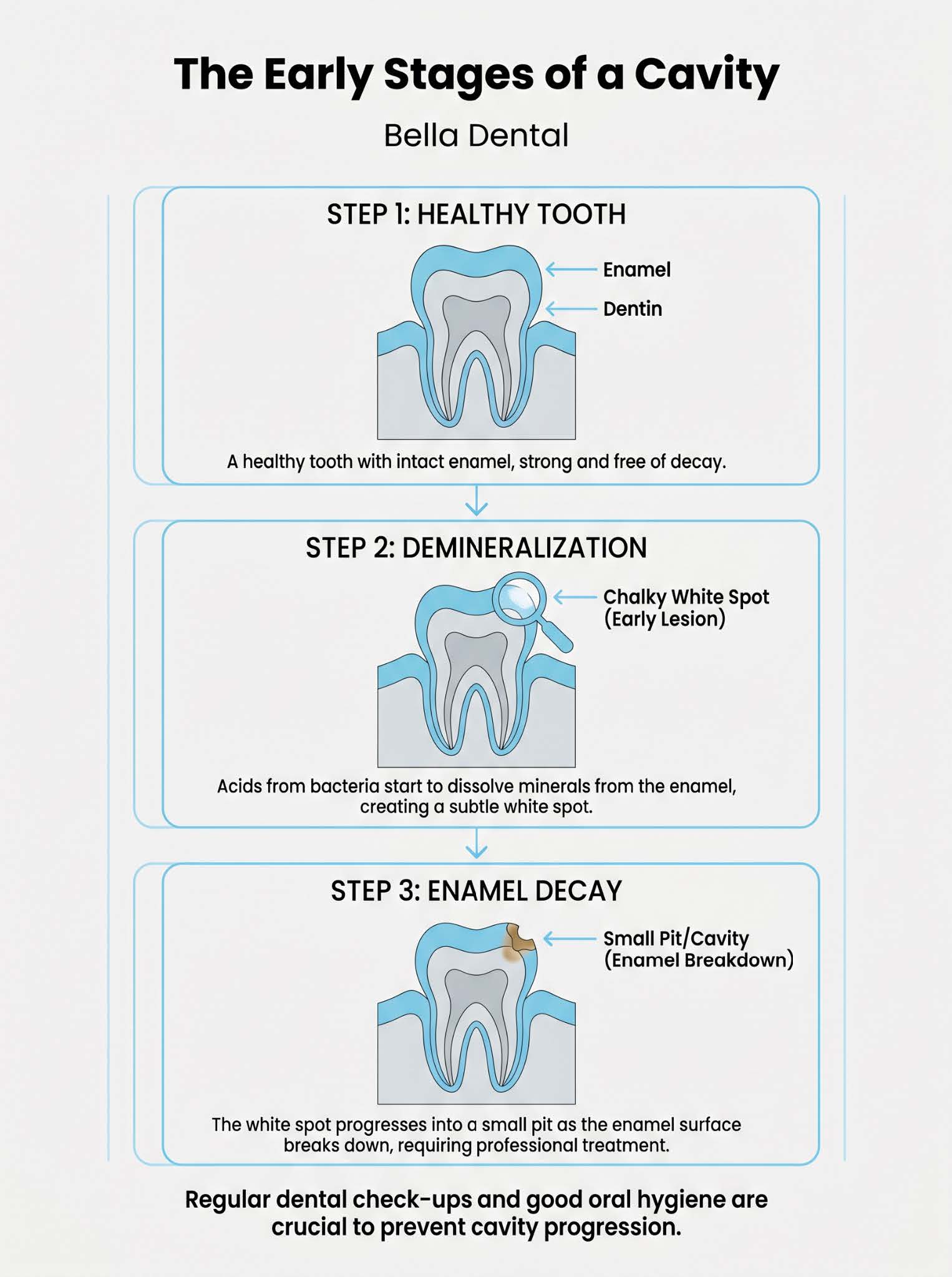
What Does the Beginning of a Cavity Look Like?
What Does the Beginning of a Cavity Look Like?
Maintaining a healthy smile requires vigilance and a proactive approach to oral hygiene. Brushing an...

What Is a Dental Emergency?
What Is a Dental Emergency?
Pain does not always match the seriousness of a dental problem. A chipped tooth may look alarming bu...
Call Bella Dental at (805) 394-3000 for more information on booking an appointment, or fill out the form below and we will reach out to you!
